

A garage often does more than shelter your car, it can be a workshop, home gym, storage area, or space for weekend projects. Choosing the best LED lights for your garage ceiling starts with understanding how you use that space. This guide explains how to compare brightness, fixture styles, color temperature, and installation options so you can create a well-lit garage without harsh glare, frustrating shadows, or unnecessary expense.
Quick Comparison: Best Garage Ceiling Lights
| Product | Best For | Max Output | Power |
| Long Strip Linear LED Ceiling Light | Best overall garage ceiling light | 8,000 lm | Hardwired |
| UFO Dish LED Floodlight Barn Light | Large & detached garages | 39,000 lm | Hardwired |
| Strip Dimming LED Ceiling Light | Remote-control dimming | 40W LED | Hardwired |
| Imitation Sky Dimmable Ceiling Light | Skylight-style brightness | 15,390 lm | Hardwired |
| Geometric Long Strip LED Ceiling Light | Statement design | 120W | Hardwired |
| Geometric Hexagon LED Ceiling Light | High color accuracy (CRI>90) | 12,000 lm | Hardwired |
| Square LED Ceiling Spot Light | Task zones & workbenches | 1,200 lm/head | Hardwired |
| Motion-Sensor Recessed Ceiling Light | Hands-free convenience | 485 lm | Hardwired |
1. Best Overall: Modern Minimalist Long Strip Linear LED Ceiling Light
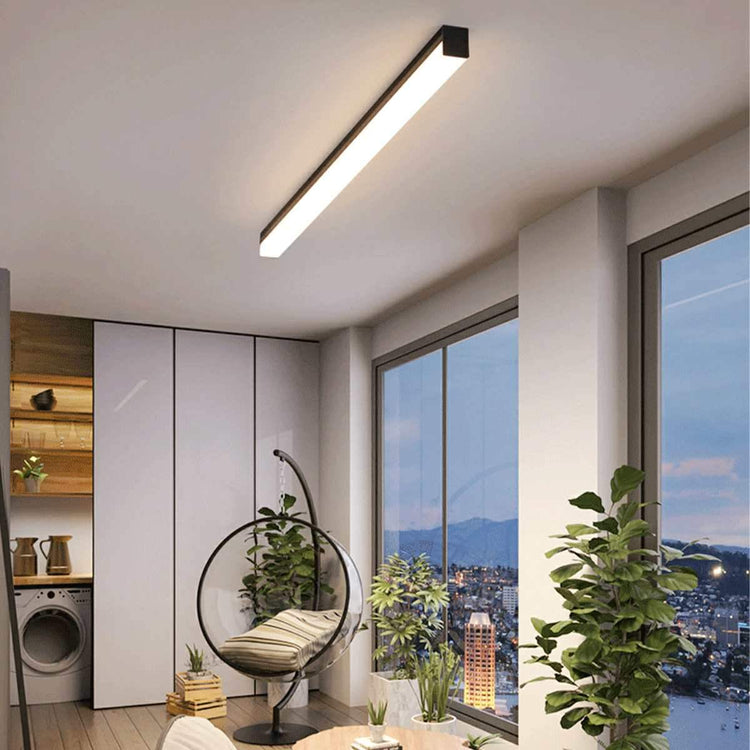
If you want the best LED lights for garage ceiling installations that look as good as they perform, this ultra-slim linear LED strip is our top pick. Its clean architectural profile mounts flush to the ceiling, keeps clear of garage door tracks, and delivers bright, even, flicker-free illumination across the whole bay. Three selectable color temperatures (3000K/4500K/6000K) let you switch between warm, neutral, and daylight-cool light, while six wattage options — from a compact 12W up to a powerful 100W, 98-inch model producing 8,000 lumens — cover everything from a single-car garage to a spacious workshop.
Pros
- Up to 8,000 lumens — bright enough for a full two-car garage workshop
- 3 selectable color temperatures to match any task or time of day
- Ultra-slim aluminum profile sits close to the ceiling, clear of door tracks and storage
- 8 size options from 12W to 100W fit nearly any garage layout
- 50,000-hour rated lifespan with energy-efficient integrated LEDs
Cons
- Hardwired installation — best handled by an electrician if you are replacing an old fixture
- Fixed color temperature per unit unless you choose the 3-color mode version
- Higher wattage models need solid ceiling mounting support
Specifications
| Power Options | 12W / 19W / 24W / 36W / 50W / 80W (up to 100W in 98.43" size) |
| Lumens | 1,200 – 8,000 lm |
| Color Temperature | 3000K / 4500K / 6000K, or 3-Color Mode |
| Material | Aluminum + PC diffuser |
| CRI | Ra>80 |
| Voltage | 110–220V |
| Lifespan | 50,000 hours |
| Working Temperature | -25°C to 65°C — suits unheated garages |
| Coverage | 54 – 171 sq ft per fixture |
| Installation | Hardwired |
2. Best for Large Garages: UFO Dish Waterproof LED Floodlight Barn Light

For big detached garages, barn-style workshops, or garages that double as service bays, nothing beats raw output. This UFO dish LED floodlight delivers up to a staggering 39,000 lumens of crisp 6000K cool-white light — enough to flood a 2,000+ sq ft area — from a compact IP65 waterproof housing. It shrugs off dust, moisture, and temperature swings from -25°C to 65°C, making it one of the best garage ceiling lights for unconditioned and semi-outdoor spaces. Choose from 100W to 300W depending on your ceiling height and coverage needs.
Pros
- Massive output up to 39,000 lumens — ideal for high or large garage ceilings
- IP65 waterproof rating handles damp garages and wash-down areas
- 130 lm/W efficiency keeps running costs surprisingly low for the brightness
- Wide 90° beam angle covers large floor areas evenly
- 50,000-hour lifespan with rugged PC construction
Cons
- Fixed 6000K cool white only — no warm or dimming options
- Very bright; best mounted high to avoid glare at eye level
- Hardwired installation recommended for weatherproof performance
Specifications
| Power Options | 100W / 150W / 200W / 300W |
| Lumens | 13,000 / 19,500 / 26,000 / 39,000 lm |
| Color Temperature | 6000K Cool White |
| Efficacy | 130 lm/W |
| Waterproof Rating | IP65 |
| CRI | 80 |
| Voltage | 110–240V |
| Beam Angle | 90° |
| Lifespan | 50,000 hours |
| Coverage | 861 – 2,153 sq ft |
3. Best Dimmable Pick: Minimalist Strip Dimming LED Ceiling Light with Remote
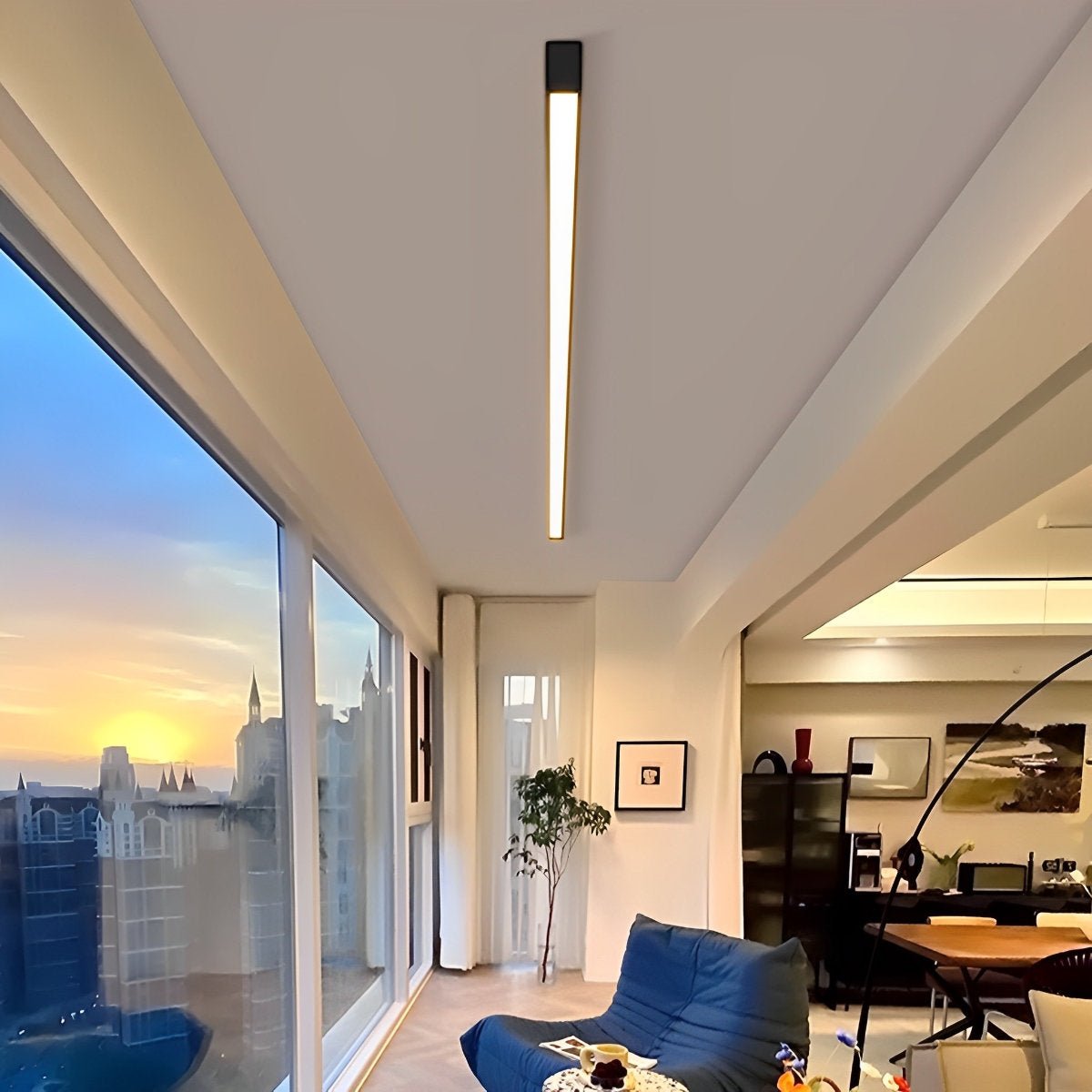
Not every garage session needs full brightness. This slim strip ceiling light pairs stepless dimming with a remote control, so you can dial brightness from a full workshop blast down to a soft night light for grabbing tools after dark — all without leaving your workbench. Choose the 3-color mode version to switch between 3000K, 4500K, and 6000K using a standard wall switch, or the dimmable version to adjust both color temperature and brightness by remote. Five lengths from 31.5" to 78.7" fit any garage width.
Pros
- Stepless dimming from the included remote — no ladder trips to adjust
- Choose 3-color switching (wall switch) or full dimming (remote) versions
- 5 lengths from 31.5" to 78.7" for any garage size
- Lightweight aluminum and acrylic build, easy for one person to mount
- Covers 107 – 161 sq ft per fixture
Cons
- 110V only — check compatibility with your supply
- 3-color mode version cannot dim; dimming requires the remote version
- Lower lumen output than the strip light in our top pick — best layered with task lights
Specifications
| Power Options | 16W (31.5") / 20W (39.4") / 24W (47.2") / 30W (59.1") / 40W (78.7") |
| Color Temperature | 3 Color Modes (3000K/4500K/6000K), Dimmable |
| Material | Aluminum + Acrylic |
| Finishes | Black, White |
| Voltage | 110V |
| Control | Wall switch or remote control |
| Coverage | 107.6 – 161.4 sq ft |
| Installation | Hardwired |
4. Best Skylight Style: Modern Imitation Sky Recessed LED Dimmable Ceiling Light
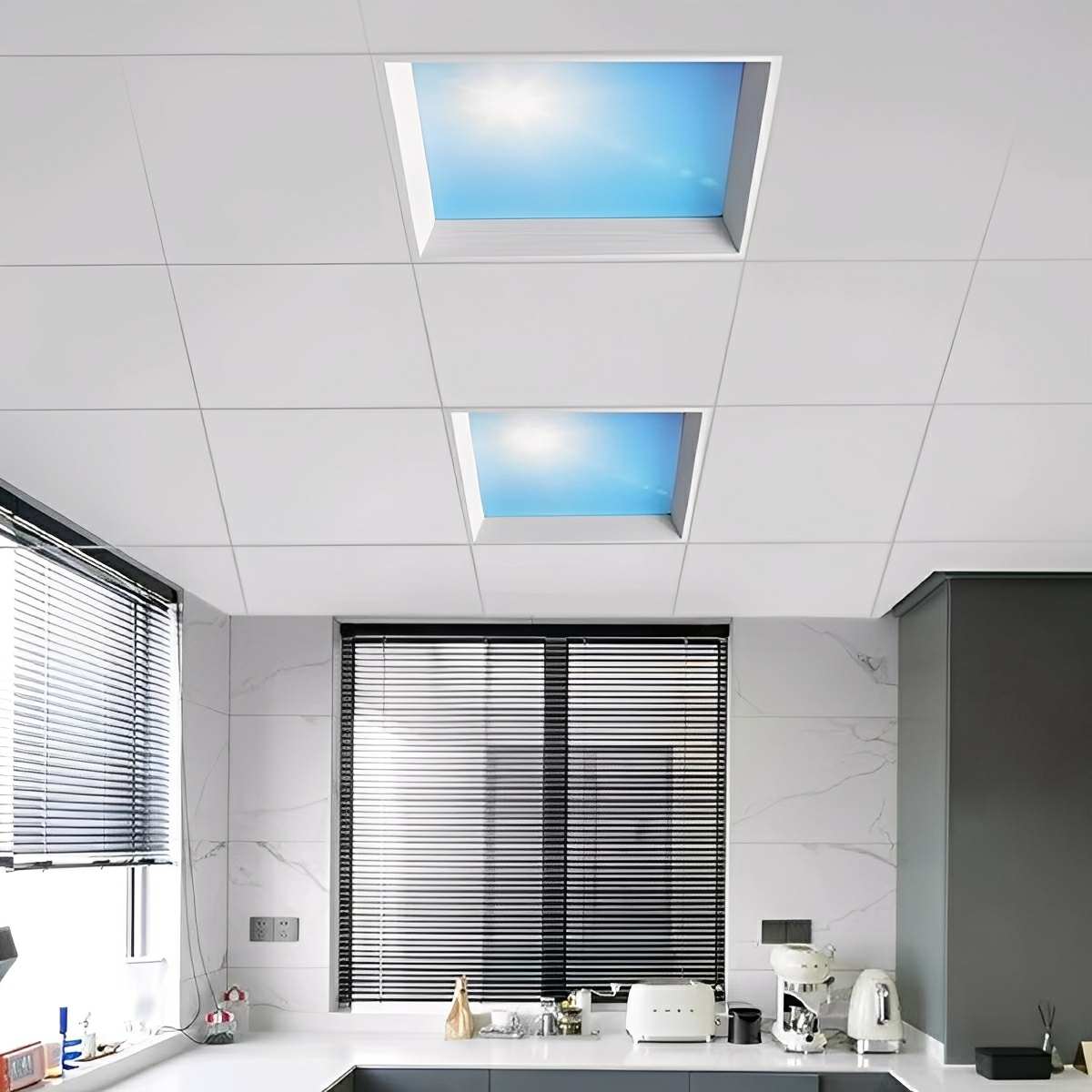
Want your windowless garage to feel like it has a skylight? This imitation-sky LED panel mimics the bright, open feel of daylight overhead, pushing up to 15,390 lumens through a soft diffused surface — perfect for a garage gym or detail work where even, shadow-free light matters. Stepless dimming from 3000K to 6000K lets you shift from warm morning light to crisp daylight white, and four shapes (square and rectangular) fit different ceiling layouts.
Pros
- Up to 15,390 lumens of soft, evenly diffused light — no harsh LED hotspots
- Stepless dimming 3000K–6000K for any mood or task
- Skylight effect makes a dark garage feel open and inviting
- Aluminum alloy + PVC build rated for 50,000 hours
- 4 size/shape options including long rectangles for wide garages
Cons
- Surface area is large — verify clearance around garage door rails before ordering
- 3.15" depth is taller than typical strip lights
- Not moisture-rated; avoid direct wash-down zones
Specifications
| Power Options | 72W / 90W / 144W / 162W |
| Lumens | 6,840 / 8,550 / 13,680 / 15,390 lm |
| Color Temperature | Stepless dimming 3000K–6000K |
| Material | Aluminum alloy + PVC |
| CRI | Ra>80 |
| Voltage | 110–220V |
| Lifespan | 50,000 hours |
| Coverage | 32 – 248 sq ft |
| Installation | Hardwired |
5. Best Statement Design: Modern Minimalist Geometric Long Strip LED Ceiling Light
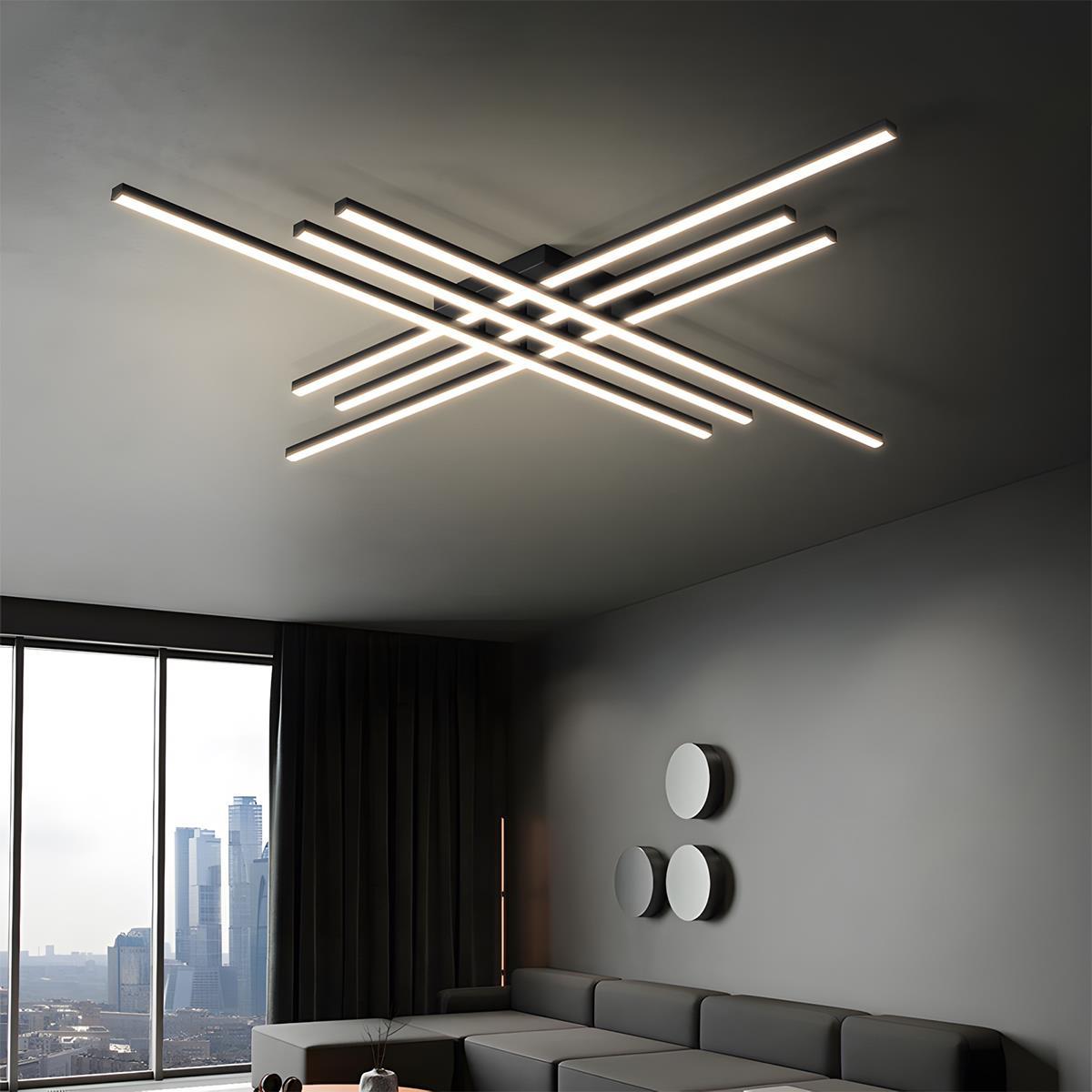
Who says a garage can't have style? This geometric LED ceiling light doubles as a design statement, framing your space with angular light while delivering serious output — up to 120W covering 171 sq ft. Pick the 3-color mode version for switchable 3000K/4500K/6000K, or stepless dimming (3000K–6000K) for full control. The iron, acrylic, and aluminum build gives it a premium feel that suits a modern garage studio, showroom-style car bay, or finished garage gym.
Pros
- Striking geometric design elevates a finished garage or showroom bay
- Choose 3-color modes or stepless dimming (3000K–6000K)
- Up to 120W of output covering 171 sq ft
- Durable iron, acrylic, and aluminum construction
- Black or white finishes to match any decor
Cons
- Wall-mount installation type — plan mounting points carefully
- Fixed geometric shapes may not suit every ceiling layout
- Indoor use only; not for damp or unsealed garages
Specifications
| Power Options | 24W / 38W / 90W / 120W |
| Color Temperature | 3 Color Modes (3000K/4500K/6000K) or Stepless Dimming (3000K–6000K) |
| Material | Iron + Acrylic + Aluminum |
| Finishes | Black, White |
| Voltage | 110–240V |
| Coverage | 32 – 171 sq ft |
| Installation | Hardwired, wall mount |
6. Best Color Accuracy: Modern Minimalist Geometric Hexagon LED Ceiling Light
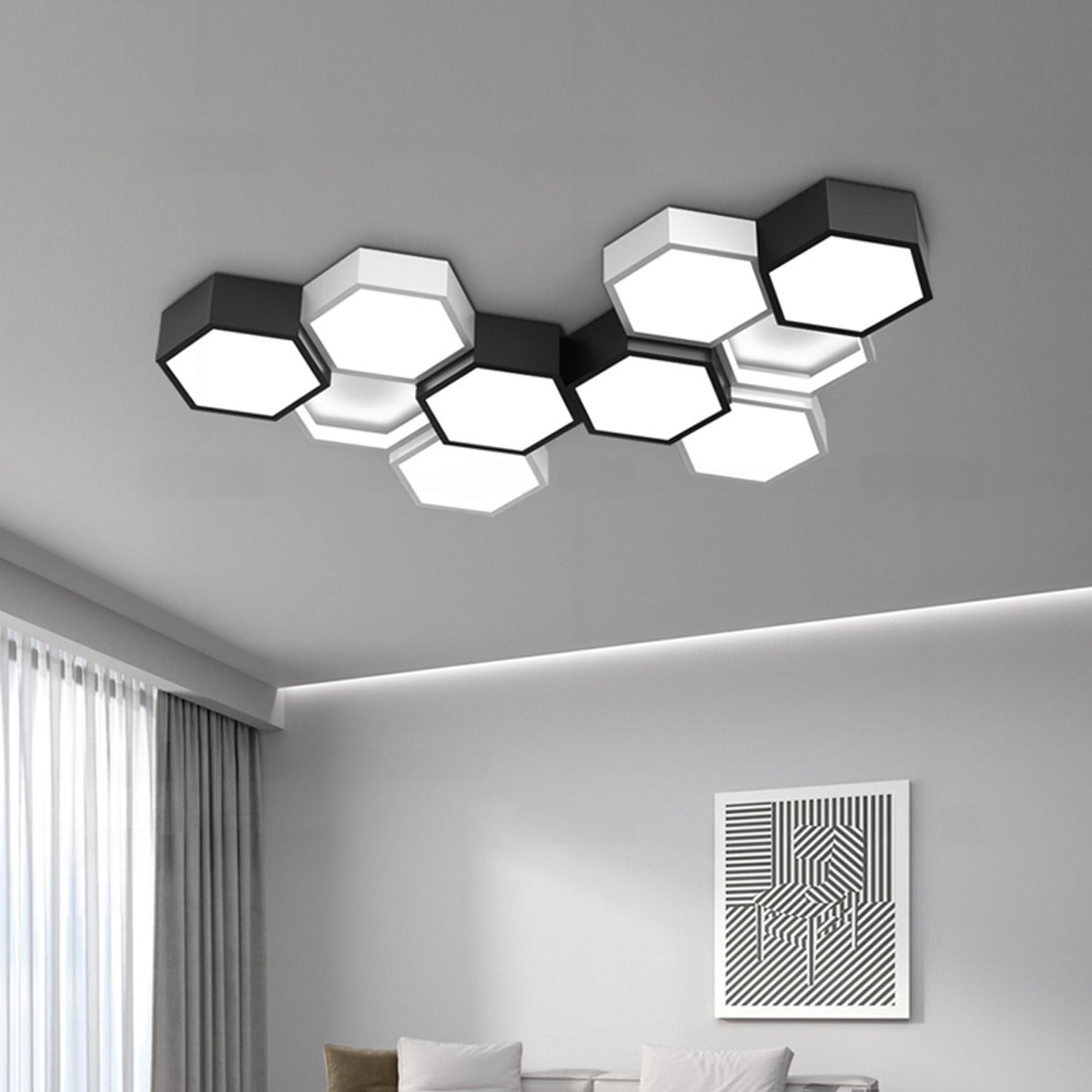
For detailing, painting, or any work where seeing true colors matters, this hexagon LED ceiling light is a standout. Its CRI above 90 renders colors more accurately than standard garage fixtures (most are CRI 80), so paint swirls, fluid leaks, and finish flaws are easier to spot. Available in 5-, 6-, 9-, and 10-head configurations producing up to 12,000 lumens, it combines 3-color switching with stepless dimming in one eye-catching hexagonal design.
Pros
- High CRI (Ra>90) — excellent for detailing, painting, and color checks
- Up to 12,000 lumens across 171 sq ft
- 3 color modes plus stepless dimming
- Semi-flush 2.76" profile stays clear in garages with limited height
- White or black-white finishes
Cons
- Larger configurations (9–10 head) weigh over 22 lb — needs secure ceiling anchoring
- Hexagon shape takes up more ceiling area than a linear strip
- Higher price point than basic strip fixtures
Specifications
| Configurations | 5-Head 51W / 6-Head 59W / 9-Head 108W / 10-Head 120W |
| Lumens | 5,100 / 5,900 / 10,800 / 12,000 lm |
| Color Temperature | 3 Color Modes + Stepless Dimming (3000K–6000K) |
| CRI | Ra>90 |
| Material | Iron + Acrylic |
| Voltage | 110–220V |
| Lifespan | 50,000 hours |
| Coverage | 54 – 171 sq ft |
7. Best Task Lighting: Modern Minimalist Square LED Ceiling Spot Light

Overhead garage lights for workbenches and tool walls need focus, not just flood. This square LED ceiling spot light comes in 1- to 4-head configurations (7W or 12W per head), letting you aim crisp pools of light exactly where you work. With CRI above 90, it renders tool labels, wire colors, and surfaces accurately, and the glare-free design keeps your eyes comfortable during long projects. Multiple units can be spaced along a ceiling to build a complete task-lighting grid.
Pros
- 1–4 head options let you scale light to your workbench layout
- High CRI (Ra>90) shows true colors for electrical and finish work
- Glare-free aluminum housing comfortable for long sessions
- Compact 8.9" square footprint fits between door tracks and storage
- 50,000-hour lifespan with 3 color modes
Cons
- Lower total output (700–1,200 lm per head) — pair with general overhead lighting
- Spot-style beam is focused rather than room-filling
- Hardwired only; plan circuit placement before drywall or ceiling finish
Specifications
| Configurations | 1 / 2 / 3 / 4 Heads, 7W or 12W per head |
| Lumens | 700 lm (7W) or 1,200 lm (12W) per head |
| Color Temperature | 3 Color Modes (3000K/4500K/6000K) |
| CRI | Ra>90 |
| Material | Aluminum |
| Voltage | 110–220V |
| Coverage | 54 – 171 sq ft |
8. Best Hands-Free Option: Motion-Sensor Recessed LED Ceiling Light
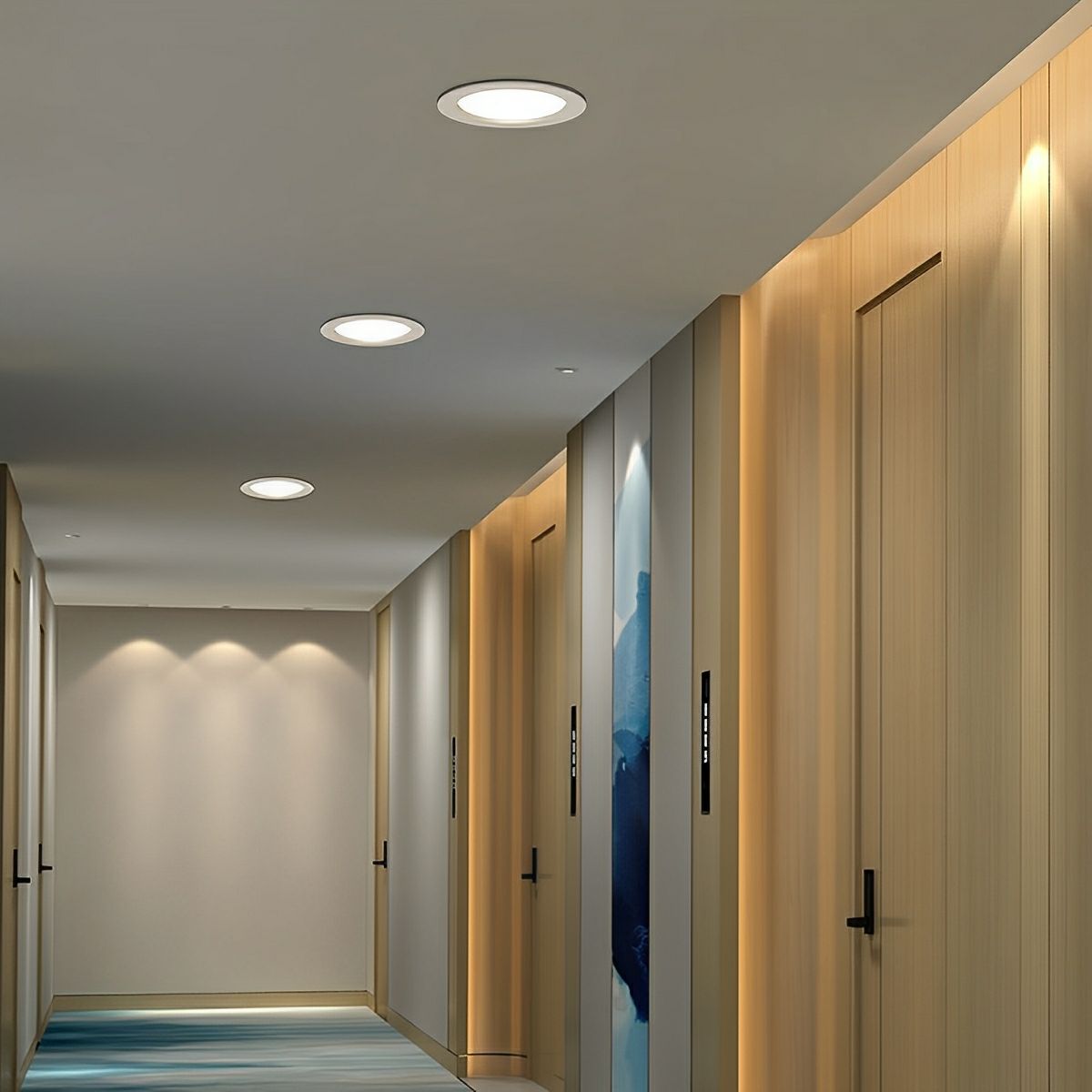
The best garage lights sometimes don't even need a switch. This recessed ceiling light combines a light sensor with a 120° human-body motion sensor (detecting up to 157" away), switching on automatically when you walk in with an armload of groceries. The 5W, 485-lumen cool-white output with CRI above 90 is ideal for entry areas, hallways into the house, and garage corners — add several for automatic pathway lighting throughout the space.
Pros
- Auto on/off with dual light + motion sensing — no fumbling for switches
- Ultra-slim recessed design disappears into the ceiling
- High CRI (Ra>90) for clear, vivid light
- Two cutout sizes (3.78" and 4.37") fit common recessed housings
- Low 5W draw — cheap to run around the clock in sensing mode
Cons
- 485 lm per unit — supplemental, not primary, garage lighting
- Fixed 6000K cool white only
- Requires recessed ceiling installation; not for surface mounting
Specifications
| Power | 5W / 485 lm |
| Color Temperature | 6000K Cool White |
| Sensing | 120° angle, 118"–157" range, light + body sensors |
| CRI | Ra>90 |
| Material | Aluminum |
| Voltage | 110–240V |
| Cutout Sizes | 2.5" / 3.5" (70–110mm) |
| Coverage | 32 – 54 sq ft |
How to Choose the Best Garage Ceiling Lights
The best LED lights for a garage ceiling provide even illumination, fit your ceiling height, and put light where you actually need it. For a typical residential garage, linear LED shop lights or low-profile wraparound fixtures are practical starting points. Add separate task lighting over workbenches rather than expecting a single ceiling fixture to handle every job.
Before buying, compare fixture lumens, light distribution, color quality, installation requirements, and operating conditions—not just wattage or advertised brightness.
1. Plan Around How You Use Your Garage
Start by dividing the garage into activity zones. A storage shelf needs different lighting from a workbench, and a vehicle’s vertical body panels need different illumination from the floor around it.
| Garage activity | Lighting priority | Suggested approach |
|---|---|---|
| Parking and everyday access | Visibility around vehicles and doors | Even overhead lighting with convenient controls |
| Storage and laundry | Readable labels and visible shelves | Ceiling lighting supplemented near deep shelves or appliances |
| DIY projects and repairs | Clear visibility of tools and work surfaces | General lighting plus adjustable workbench lights |
| Home gym | Comfortable illumination with limited glare | Diffused fixtures positioned outside direct sightlines |
| Car detailing | Visibility across horizontal and vertical surfaces | Overhead lighting, side lighting, and portable inspection lights |
Sketch the space before choosing fixtures. Mark garage-door tracks, overhead storage, cabinets, outlets, and work areas. Plan for both an open and closed garage door so the door does not block the lighting you depend on.
2. Understand Lumens Before Choosing Brightness
Lumens describe how much light a fixture produces. Watts describe how much electricity it uses. To compare energy efficiency, look at lumens per watt: a fixture that produces the same light output with fewer watts is more efficient.
However, fixture output is not the same as light reaching your work surface. Ceiling height, fixture optics, room proportions, and the reflectivity of walls and ceilings affect how much emitted light reaches the useful area.
Do not confuse fixture lumens with foot-candles
A foot-candle measures light arriving at a surface: one lumen per square foot. Dividing a fixture’s advertised lumens by your garage’s floor area does not automatically tell you the actual foot-candles on the floor or workbench, because not all emitted light reaches that surface.eere.energy+1
This distinction matters when comparing garage lighting guides. A recommendation expressed as “lumens per square foot” may be a rough purchasing shortcut, while a foot-candle target describes actual illumination.
Use lumen totals for initial comparisons, but ask for a lighting layout or photometric calculation when a specific work-surface light level matters.
A simple fixture-output example
Imagine a 20-by-20-foot garage with four fixtures rated at 5,000 lumens each:
-
Garage area: 400 square feet.
-
Combined fixture output: 20,000 lumens.
-
Advertised output divided by area: 50 lumens per square foot.
That calculation helps compare fixture packages. It does not establish that the garage will receive 50 foot-candles everywhere.
For a workshop, improve illumination at the workbench first instead of automatically multiplying brightness across the entire garage.
3. Match the Fixture to the Ceiling and Layout
Ceiling height helps narrow your options, but it should not be the only deciding factor. Mounting height, beam distribution, glare, and obstructions all affect whether a fixture works well.
LED shop lights: Flexible general-purpose lighting
Linear LED shop lights are a useful starting point for parking areas, hobby spaces, and workbenches. Depending on the model, they may hang from chains, mount directly to the ceiling, plug into an outlet, or require hardwiring. Linkable versions can connect multiple compatible fixtures from one supply point.
Choose them when you want:
-
A straightforward replacement for aging utility lighting.
-
Several light sources distributed across the garage.
-
The flexibility to suspend fixtures closer to a work area.
-
Plug-in installation where suitable outlets already exist.
Check the manufacturer’s maximum linking limit. “Linkable” does not mean an unlimited number of fixtures can share one connection; products specify their own limits.
Wraparound fixtures: A low-profile option
For a low ceiling or a garage crowded with overhead storage, consider surface-mounted wraparound fixtures. Their broad lenses make them worth evaluating when exposed light sources would sit close to eye level.
Compare the actual fixture depth and light distribution rather than assuming every wraparound model performs the same way.
Linear strip fixtures: Useful for organized rows
Rigid linear LED strip fixtures can suit layouts with long parking bays or parallel work zones. When shopping, distinguish these ceiling fixtures from flexible adhesive LED tape. Products may share the word “strip” without offering the same mounting method, output, or intended use.
Low-bay and high-bay fixtures: Evaluate the optics
For a tall garage, workshop, or vehicle-storage building, compare fixtures designed for higher mounting positions. Do not select a high-bay light solely because the garage feels large.
Request a recommended mounting range and lighting layout. A powerful fixture with the wrong distribution can create bright spots while leaving surrounding areas underlit.
4. Choose Color Temperature and Color Rendering Separately
Color temperature describes whether white light looks warmer or cooler. It does not measure brightness or how accurately the light reveals colors. The Department of Energy identifies color appearance and color rendering as distinct lighting characteristics.
For shopping purposes, compare these common options:
| Color temperature | Appearance | A practical reason to consider it |
|---|---|---|
| 3000K | Warmer white | A garage used partly as a comfortable multipurpose room |
| 4000K | Neutral-to-cool white | A starting point for mixed parking, storage, and project use |
| 5000K | Cooler, daylight-style white | A preference for a crisp-looking workshop environment |
Treat those applications as starting points, not universal rules. A higher Kelvin rating does not automatically make a fixture brighter or better for detailed work.
If you are unsure, consider a fixture with selectable color temperature and test the settings in the garage before committing to one.
Look beyond “daylight” for color-sensitive work
For painting, finishing, crafts, or comparing vehicle colors, examine the color rendering index, or CRI, as well as color temperature. As a purchasing preference, prioritize CRI 90 or higher for color-sensitive work when suitable fixtures fit your budget.
CRI is one part of the decision, not a guarantee that every color will look identical under every light. For an important finish or paint match, inspect a sample under the proposed lighting before buying the full setup. Color rendering, consistency, and stability are separate performance considerations.
5. Place Fixtures to Reduce Shadows and Glare
More lumens cannot fully compensate for poor placement. A useful layout puts light on the work—not just on the center of the floor.
Use these planning principles:
-
Spread fixtures across the garage instead of relying on one intense central source.
-
Keep important lights clear of garage-door panels, tracks, and overhead storage.
-
Position workbench lighting so your head and shoulders do not block the light.
-
Add local lighting inside deep storage or beneath cabinets.
-
Check sightlines from exercise benches, seated work areas, and beneath vehicles.
Plan differently for car detailing
Treat general lighting and inspection lighting as separate layers.
Overhead fixtures help illuminate the roof, hood, and surrounding floor. Side lighting helps you examine doors and lower panels. A movable inspection light lets you change the angle while checking a specific area.
Do not judge a detailing setup only by whether the whole room looks bright. Test it on the surfaces and defects you need to see before installing a complete system.
Test before final installation
Where practical, test one fixture or temporarily position suitable plug-in lights before purchasing a full set. Check the space at night with a vehicle parked inside.
Look for:
-
Shadows across the workbench.
-
Dark gaps between fixtures.
-
Glare reflected from glossy surfaces.
-
Poor visibility behind vehicles or beneath shelving.
-
Light blocked when the garage door opens.
6. Check Environmental Ratings and Temperature Limits
An unconditioned garage may expose fixtures to summer heat, winter cold, dust, or moisture. Review the product’s specified operating environment rather than assuming all LED garage lights tolerate the same conditions.
Heat deserves particular attention. The Department of Energy explains that elevated LED operating temperatures can reduce light output and accelerate long-term deterioration.
Before buying, verify:
-
Minimum and maximum operating temperatures.
-
Suitability for the actual moisture exposure.
-
Any restrictions on enclosed installation.
-
Cleaning and maintenance instructions.
-
Warranty exclusions related to temperature or environment.
For damp or wash-down areas, have the installer verify the required location rating. Do not substitute a general “garage light” description or a vague “water-resistant” claim for documentation that matches the installation.
7. Choose Between New Fixtures and LED Tube Retrofits
Replacing an entire fluorescent fixture is not always necessary, but LED tubes are not universally interchangeable.
Two common retrofit categories are:
-
Type A: Designed to operate with compatible existing ballasts. Check the tube manufacturer’s ballast compatibility information.
-
Type B: Designed for ballast-bypass installation, which requires wiring changes.
Retail product specifications distinguish plug-and-play tubes from ballast-bypass tubes and identify whether rewiring is required.
Compare the total project cost, including installation and the condition of the old fixture. A low tube price may be less attractive if the fixture also needs repairs or substantial modification.
Use a qualified electrician for hardwiring or ballast-bypass work, and follow the product’s installation instructions.
8. Use Controls That Fit Your Routine
Divide the garage into lighting zones so you do not need every fixture operating for every visit. A practical arrangement might separate general ceiling lights, workbench lighting, and storage-area lighting.
Occupancy sensors can be convenient for brief visits, but a workshop benefits from controls that will not leave you in the dark while you remain relatively still. Choose compatible controls and consider a manual override or adjustable timeout.
There is no need to leave LEDs on simply to avoid normal switching. Department of Energy guidance states that frequent switching does not reduce LED product life and notes that control compatibility should still be confirmed.
If you want dimming, verify both the fixture and its driver support it. A fixture with selectable lumen settings is not necessarily dimmable from a wall control.betterbuildingssolutioncenter.energy+1
9. Compare Long-Term Value, Not Just Purchase Price
A useful comparison includes more than the number of fixtures in the box.
Check:
-
Total fixture lumens and power consumption.
-
Distribution and lens design.
-
Color temperature and color-rendering information.
-
Mounting hardware and installation requirements.
-
Maximum linking limits.
-
Control compatibility.
-
Operating-temperature range.
-
Warranty coverage and replacement availability.
Ask what the advertised lifespan means. LED longevity can involve gradual loss of light output, color change, or failure of a driver or another component—not simply whether the LEDs still turn on.betterbuildingssolutioncenter.
Estimate energy use with actual wattage
Use this formula:

Multiply the result by your electricity rate to estimate annual operating cost.
Use actual input watts, not a “watt-equivalent” marketing figure, and compare products that deliver a similar useful lighting result.
FAQs
How many lumens do I need for a garage?
As a rough shopping guide, estimate 30–50 lumens per square foot for parking and storage, or 50–75 for a garage used for projects. Detailed repair work may require stronger task lighting. These figures describe combined fixture output, not guaranteed brightness on your workbench. Ceiling height, fixture placement, dark walls, and parked vehicles affect the result. Commercial spaces benefit from a lighting layout rather than a simple lumen calculation.
Is 5000K or 4000K better for a garage?
Choose 4000K if you prefer a neutral-looking garage that supports parking, hobbies, and exercise. Choose 5000K if you enjoy a cooler, daylight-style appearance. Neither setting automatically provides better visibility or greater brightness. For painting, finishing, or automotive color comparisons, evaluate color rendering separately. If you are undecided, buy a selectable-color fixture and compare both settings at night before purchasing matching lights for the entire garage.
Can LED garage lights handle cold temperatures?
Many LED garage fixtures work well in cold weather and provide immediate light without the warm-up associated with some other technologies. However, cold-weather suitability depends on the complete fixture, including its driver and controls. Check the manufacturer’s minimum operating temperature against your garage’s winter conditions. Also review moisture suitability and maximum temperature limits. A product described as a garage light is not automatically suitable for every unheated space.
Do I need a professional to install LED garage lights?
Some plug-in fixtures and screw-in lights are suitable for DIY installation when an appropriate existing connection is available and the instructions permit it. Hire a qualified electrician for new wiring, additional outlets, hardwired fixtures, or uncertain electrical conditions. Fluorescent-to-LED conversions may also require professional help if wiring changes are involved. Before installation, verify mounting support, garage-door clearance, electrical compatibility, and any local permit requirements. Never assume every retrofit installs identically.
What is the difference between high-bay and low-bay LED lights?
High-bay and low-bay fixtures differ primarily in their intended mounting conditions and light distribution. Low-bay products generally serve heights up to about 20 feet, while high-bay products commonly serve taller spaces. These boundaries vary by manufacturer. Selecting the wrong optics can produce glare, concentrated bright spots, or inadequate coverage. For residential garages, compare low-profile linear fixtures first and select industrial fixtures only when their specifications suit the installation.
How do I reduce glare in a garage with a low ceiling?
Choose fixtures with broad diffusers or shielding instead of relying on exposed, concentrated LED sources. Distribute light across several suitable fixtures rather than placing all the output in one location. Keep bright sources outside your usual sightlines, and check reflections from polished vehicles or glossy floors. Add focused workbench lighting where needed. Before final installation, evaluate comfort while standing, sitting, and looking upward from typical working or exercise positions.energy+1
Can I use LED garage lights for a home gym?
Yes, but choose lighting for visual comfort as well as visibility. Diffused fixtures are worth considering when exercises involve looking toward the ceiling. Avoid positioning intense light sources directly above a bench or common floor-exercise area. Check overhead clearance around equipment and consider compatible dimming for different activities. If the garage also serves as a workshop, separate lighting zones can provide brighter task illumination without making the exercise area uncomfortable.
Are motion-sensor lights reliable in a garage?
Motion-sensor lights can work well when their detection coverage and settings match the garage layout. Vehicles, shelving, and mounting position can affect performance, so test the sensor with the space arranged normally. Look for an adjustable shutoff delay and a manual override. For workbench projects, avoid depending entirely on motion detection because quiet, stationary work may not keep the lights activated. Confirm compatibility between the sensor and the selected fixtures.
How long do LED garage lights last?
Good-quality LED products may offer useful lives of roughly 30,000–50,000 operating hours or more, but the exact rating varies. Advertised lifespan often describes gradual light-output decline rather than a guaranteed failure date. Heat, driver quality, operating conditions, and other components also influence service life. Compare warranty coverage alongside lifetime claims, and check whether drivers or light sources can be replaced. A long rating does not guarantee consistent brightness throughout ownership.
Conclusion
The best LED garage ceiling lights balance brightness, coverage, comfort, and installation requirements. Start with your garage’s size, ceiling height, and everyday activities, then choose fixtures that illuminate the space without excessive glare or shadows. Add task lighting where projects demand greater visibility, and verify temperature ratings, electrical compatibility, and warranty coverage. A thoughtful layout delivers more useful results than simply choosing the brightest fixture available.


