

Table of Contents
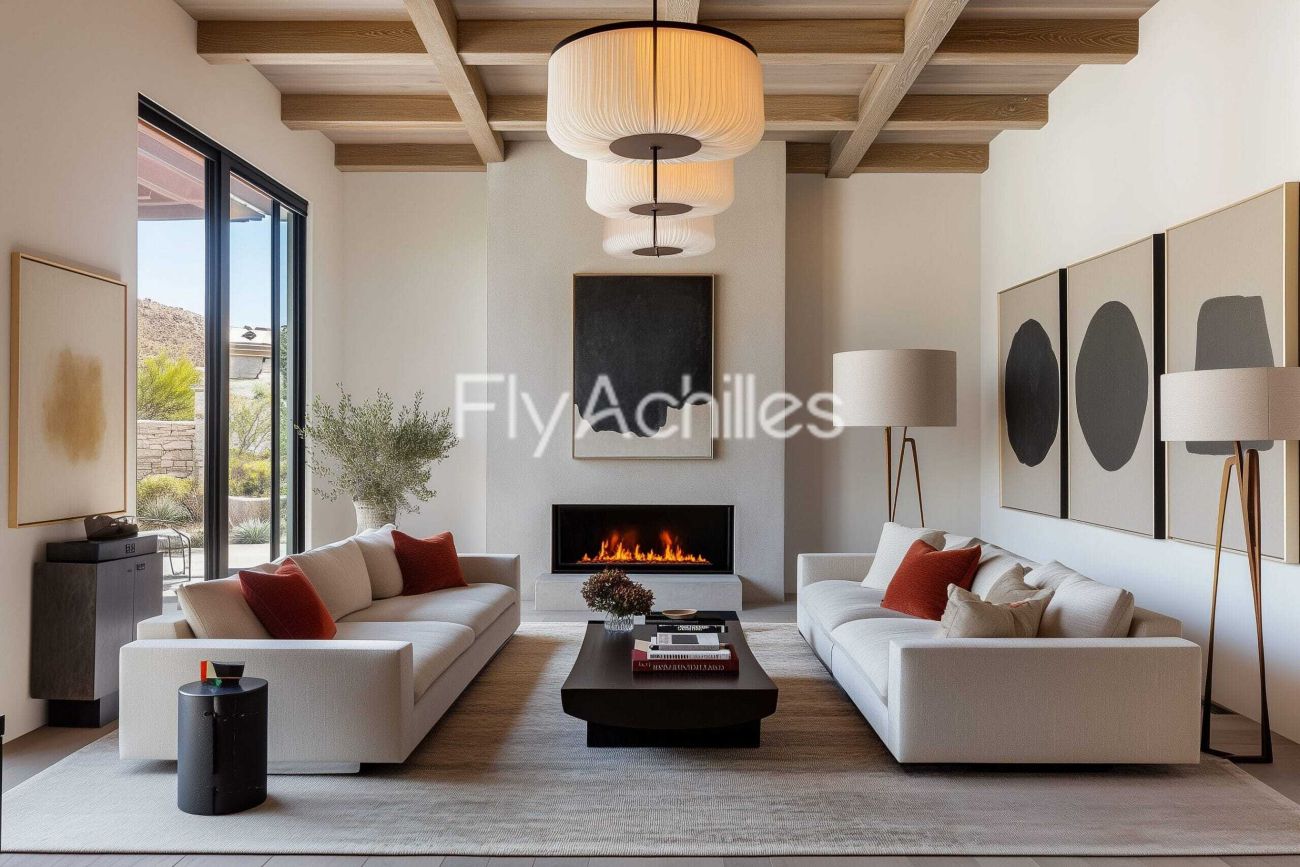
The furniture is expensive, the rugs are plush, but the room feels "flat." The reason is almost always the same: safe, boring lighting. In 2026, the industry is finally breaking the "contractor-grade" spell. We are moving away from purely functional illumination toward Functional Art—lighting that acts as a visual anchor and conversation starter.
To add artistic flair in 2026, prioritize sculptural lighting with organic silhouettes and tactile finishes like brushed brass or matte ceramic. Focus on a single statement piece—such as a fluid chandelier or arched floor lamp—to serve as a room’s visual anchor. Balance this 'art' with layered task and ambient lighting on dimmers to maintain daily practicality.
2026 Sculptural Lighting Trends

2026 trends shift from industrial rigidity to "Organic Modernism," featuring fluid lines, hand-worked glass, and warm, tactile materials. Expect a preference for "Warm Minimalism," where fixtures serve as art even when unlit, utilizing finishes like champagne bronze and fluted glass.
1.The Death of "Fast Fashion" Industrialism
For years, we were stuck in the "Edison bulb and black pipe" era. It was easy, it was cheap, and frankly, it became boring. In 2026, we are seeing a massive rejection of machine-perfect lines. We want Hand-Crafted Imperfection. This means lighting that looks like it was blown by a human or molded by hand. Why? Because as our lives become increasingly digital and "flat," we crave tactile depth in our physical spaces. A sculptural light with a textured plaster finish or a rippled glass shade provides a sensory anchor that a generic LED panel simply cannot.
2.Materials That Tell a Story
We are moving beyond shiny chrome and polished nickel. The 2026 palette is grounded in Earth Tones and Living Finishes.
-
Brushed Gold & Champagne Bronze: These offer a soft, satin-like glow that bounces light in a much "sexier" way than bright yellow brass.
-
Textured Ceramics & Alabaster: These materials don't just hold the light; they diffuse it from within, creating a moon-like glow that makes skin tones look better and rooms feel warmer.
-
Smoked & Amber Glass: Clear glass is out because it creates glare. Smoked glass hides the bulb while adding a layer of sophisticated mystery.
3.The "Unlit" Aesthetic
An expert tip I always share: Evaluat your light fixture at 2:00 PM on a Tuesday. If it looks like a piece of dead plastic hanging from the ceiling, it's not a sculptural light. True sculptural lighting, like the pieces we curate at FlyAchilles, must function as a Daytime Sculpture. The way natural sunlight hits a brushed metal arm or reflects off a fluted glass globe is just as important as how the fixture performs at night.
Choosing Your Sculptural Style

Match your lighting style to your home’s "Visual Tension." Use soft, organic shapes to break up the "boxy" feel of modern architecture, or use sharp, geometric fixtures to provide an architectural spine to rooms with rounded furniture.
1.The Conflict of "Hard" vs. "Soft"
Most modern homes are boxes. We have rectangular windows, square coffee tables, and L-shaped sectionals. If you add a square or linear light fixture to this, the room becomes an office. It feels rigid. By choosing an Organic Sculptural Style—think of a chandelier that looks like a cluster of bubbles or a branch—you introduce "Visual Tension." This contrast is what makes a room feel high-end. It’s the difference between a room that was "furnished" and a room that was "designed."
2.Finding Your "Vibe" Match
Not every sculptural light fits every home. I’ve seen people put a massive, brutalist iron chandelier in a soft, "Coastal Chic" Australian home, and it looks like a mistake, not a statement.
|
Home Style |
Recommended Sculptural Type |
Why It Works |
|
Modern Farmhouse |
Wood-beaded or Matte Black Branching |
Softens the rustic wood with intentional, dark lines. |
|
Warm Minimalist |
Plaster-white Arched or Dome |
Adds texture without introducing "visual noise" or color. |
|
Mid-Century Modern |
Brass Spheres or Multi-arm "Sputnik" |
Respects the era's geometry while adding a gold-toned glow. |
|
Urban Industrial |
Smoked Glass or Hammered Pewter |
Upgrades the raw feel with a more sophisticated, "expensive" finish. |
3.The "Statement" vs. The "Background"
A common mistake is trying to make every light a "statement." If your ceiling light is a bold sculpture, your floor lamp should be a supporting actor. If both are screaming for attention, the room feels cluttered. Pick one focal point. If you have a stunning view or a massive piece of art, perhaps your sculptural light should be "Airy" (think thin wireframes) rather than "Solid" (think heavy ceramic domes), so it doesn't block the line of sight.
Placement for Maximum Impact

Position sculptural pieces at "visual crossroads" where they anchor the room's activity. For open-concept layouts, hang pendants 7 feet from the floor to ensure safety while creating a 'psychological ceiling' that defines the living zone.
1.The 7-Foot Rule (and When to Break It)
In the US and Canada, standard ceiling height is often 8 or 9 feet. The most common placement disaster I see is the "Head-Banger." People hang beautiful pendants too low in walk-areas. The baseline: The bottom of any hanging fixture should be at least 84 inches (7 feet) from the floor. However, if you are hanging a light over a coffee table, break the rule. Drop it lower—around 60 to 66 inches from the floor. Why? Because no one is walking over the coffee table, and lowering the light creates an "intimacy bubble." It brings the art down to eye level when you are seated, making the conversation area feel cozy and exclusive.
2.The "Visual Crossroad" Concept
Don't just center the light in the room because that’s where the wire is. Modern living happens in "zones."
-
The Anchor: Over the coffee table to unite the seating.
-
The Nook: A tall, arched floor lamp tucked behind a lounge chair to create a "room within a room."
-
The Vignette: A small, asymmetrical sculptural table lamp on a sideboard to highlight decor.
3.The "Knee-Cap" Test for Floor Lamps
If you’re choosing a sculptural floor lamp, pay attention to the base. A common mistake is choosing a beautiful lamp with a massive, heavy base that people trip over. In a high-traffic living room, the base should either be slim enough to slide under the sofa or heavy enough that it won't tip if a dog or child bumps it. If you have to step around the lamp to get to your seat, it’s in the wrong place.
Balancing Aesthetics and Function

Layer your lighting by using sculptural fixtures for "Ambient Glow" and supplemental recessed or spot lighting for "Task Work." Always prioritize a Color Rendering Index (CRI) of 90+ to ensure your artistic furniture colors remain vibrant.
1.The "Museum" Lighting Mistake
I’ve seen $10,000 designer living rooms look like a hospital waiting room because the owner used "Cool White" (5000K) bulbs. In 2026, the standard for living rooms is 2700K to 3000K. Sculptural lighting is about shadows and warmth. A cool-toned bulb kills the texture of the metal and makes the shadows look harsh and grey.
Also, look for CRI (Color Rendering Index). If you bought a beautiful forest-green velvet sofa, a low-CRI bulb will make it look like a muddy brown. Insist on bulbs or integrated LEDs with a CRI of 90 or higher. This ensures the "Art" in your room—including the lamp itself—looks the way the creator intended.
2.The Power of the Dimmer
If your sculptural light isn't on a dimmer, you've wasted 50% of its value. During the day, you might want it at 100% to fill a dark corner. But at 8:00 PM with a glass of wine? You want it at 10%. This is when the silhouette of the lamp truly shines. The glow becomes secondary to the shape of the fixture.
3.Understanding Lumens vs. Watts
In the old days, we bought "60-watt bulbs." In 2026, we talk in Lumens. A sculptural light is often a "Low-Lumen" fixture because it's meant for mood, not for surgery.
|
Living Room Activity |
Required Lumens (General) |
Sculptural Role |
|
Entertaining/Socializing |
1,500 - 2,000 |
The primary "mood" setter. |
|
Reading in a Nook |
450 - 800 |
Focused task light (use a floor lamp). |
|
Movie Night |
200 - 400 |
Low-level "glow" to prevent eye strain. |
|
Cleaning/Full Brightness |
3,000+ |
Usually handled by recessed "crew" lights. |
Finding the Right Scale
For the ideal fixture diameter, add the room's length and width in feet and convert that sum to inches. For height, allow 2.5 to 3 inches of fixture height for every foot of ceiling height to maintain visual proportion.
1.The "Missing Tooth" Analogy
I see this constantly in large suburban homes in North America: a massive Great Room with a tiny, 18-inch "builder-grade" light in the center. It looks like a missing tooth. It’s better to go slightly too large than too small. An oversized sculptural light feels like a deliberate design choice. A too-small light looks like you ran out of budget.
2.Math for Real Life
If your living room is 12 feet by 16 feet, the math is: 12 + 16 = 28. You should be looking for a fixture with a diameter of roughly 28 inches.
If you have a 10-foot ceiling: 10 times 3 = 30. Your fixture can be up to 30 inches tall without feeling like it’s crowding the space.
3.Visual Weight
Size isn't just about inches; it's about Visual Weight.
-
High Visual Weight: A 24-inch solid plaster dome feels "heavy." It draws the eye and anchors the space. Use this if your room feels "empty" or too tall.
-
Low Visual Weight: A 24-inch light made of thin brass wires or clear glass feels "light." It fills the space without blocking the view. Use this in smaller apartments (like those in Melbourne or Vancouver) where you want to keep the "airy" feel.
FAQs
Q: How do I maintain these complex sculptural shapes?
This is a major concern for busy families. My advice: Avoid the "Sputnik" style with 20+ tiny glass globes if you live in a dusty area. Instead, choose "Continuous Surface" sculptures—like large domes or smooth, fluid metal arms. A quick once-over with a ostrich-feather duster or a microfiber wand once a month is all you need.
Q: Can I mix different metal finishes in the same room?
Absolutely. In fact, Mixed Metals is a core 2026 trend. The rule is to have a "Dominant" metal (say, Matte Black) that makes up 70% of the room, and an "Accent" metal (like Brushed Gold) for the sculptural pieces. This makes the sculpture "pop" even more.
Q: Should I choose integrated LED or replaceable bulbs?
Integrated LEDs allow for much slimmer, more artistic designs that a bulky bulb simply can't fit into. However, ensure the fixture is from a reputable brand like FlyAchilles that uses high-end chips. If you want the flexibility to change your "light vibe" (warm to cool) every few years, stick with replaceable E26 base bulbs.
Q: What is the best height for a floor lamp next to a sofa?
The "Glare Rule": When you are sitting on the sofa, you should not be looking directly up into a bare bulb. The bottom of the lamp shade should be at roughly eye-level (about 38 to 42 inches from the floor) when you are seated. If the lamp is taller, ensure it has a diffuser or a downward-facing shade.
Conclusion
When you invest in a sculptural light, you aren't just buying a utility; you are defining the "personality" of your home. A chair can be replaced. A rug can be swapped. But a great light fixture becomes part of the architecture. In 2026, the bravest design choice you can make is to stop playing it safe. Choose the shape that speaks to you, get the scale right, and remember: light is the only furniture that can change the entire mood of a room with the flick of a switch.


